Monica didn’t set out to become a family child care provider. What began as a shift from career in architecture to helping family friends turned into work centered around supporting children’s lifelong success.
Originally from Mexico City, Monica shares that she was formerly an architect. “I came here to perfect my English,” she shares. “That’s where I met my husband.”
When the 2008 recession hit, construction work disappeared. At the same time, many of Monica’s friends were starting families and needed child care.
“They needed to find care, so they asked if I could take care of them,” she says. “And then one of them said I should have a family care program.”
As Monica looked into what it would take to open a licensed family child care program in Minnesota, she realized that if she was going to do this work, she wanted to do it well.
“I always liked teaching,” she says. While in college, she taught art to young children. “But I didn’t know how to really teach them or take care of them.”
So, she took the next important step.
“I decided to go back to school and get a master’s degree in early childhood education,” she says. “It was great because I learned everything that I needed to learn.”
That education continues to matter when she talks with families.
“It helps reinforce for parents that they know I know what I’m doing,” she says.
starting a family child care business
“I took in a friend’s child and another family who was related… so three kids,” she recalls. “Because we were renting, I couldn’t have a license.”
Things shifted when she and her husband bought a home and welcomed their own daughter. With that change came an opportunity to take the next step.
“The first thing I did was get my license,” she says.
Running a licensed family child care program turned out to be the right fit. In addition to serving children and families, she values setting her own schedule and working independently.
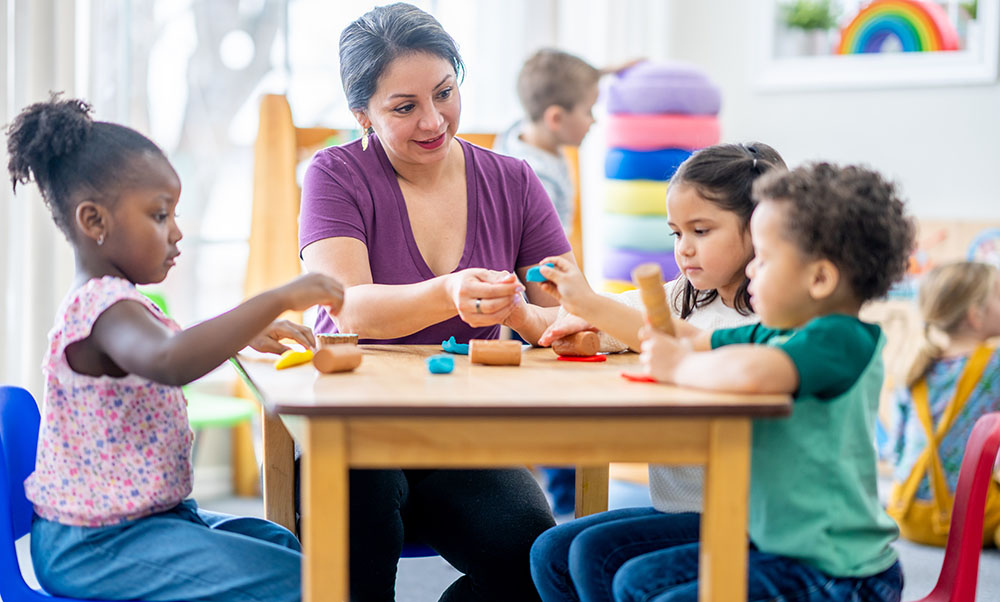
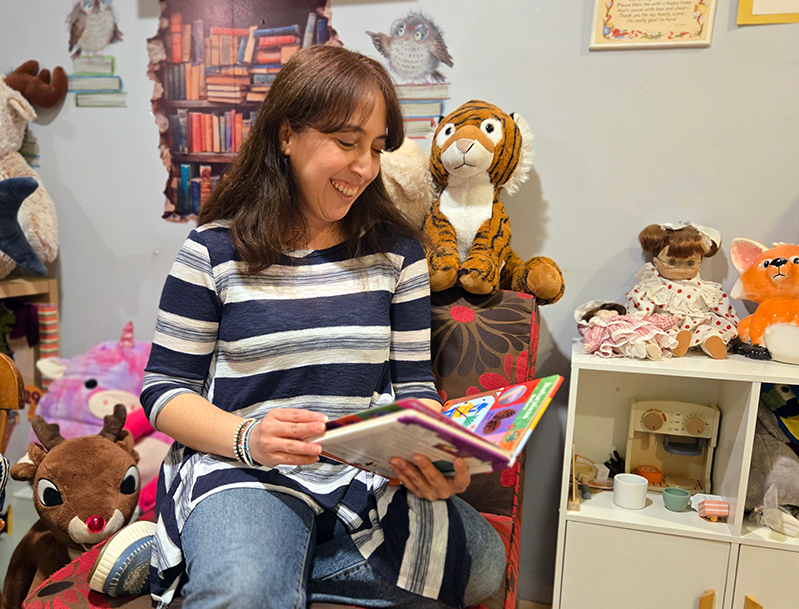
She intentionally keeps her program small, usually five to seven children at a time. “I like to be with them,” she says. “I’m always with them.”
Even with a small program, demand is steady. Monica shares that parents, especially new parents, often arrive with many questions, and she takes time to explain her approach and the importance of early learning.
Choosing quality and staying curious
Monica first connected with Think Small for coaching support in 2013, when she began working toward a Parent Aware rating. Parent Aware is Minnesota’s child care quality rating and improvement program.
“I started working on my first star,” she says. “I wanted to know if I was doing what I needed to do right.”
What started as curiosity became an ongoing commitment to continuous improvement. “I liked the program,” she says. “Every time I have to figure something new, they show me what to learn.”
That process helped her refine her curriculum, strengthen observation and assessment practices, and communicate more clearly with families about their children’s development.
“I can have the curriculum that I like, and I know how to do assessments and communicate with parents,” she explains. “Parents love it because it’s more like, ‘this is your expertise.’”
As she advances along the Parent Aware pathway, Monica benefits from ongoing support and opportunities to strengthen her program. She remains engaged through professional development and advocacy efforts.
A bilingual home child care program and a second family
Monica’s program is uniquely bilingual, with Spanish woven into daily routines.
“We’re going to speak in Spanish,” she says. “Most of the time, I think [the children] understand everything. They don’t talk too much in Spanish, but they get it.”
She begins with infants fully immersed in Spanish, then adjusts as children grow. For some families, her program becomes a multilingual environment.
“One little boy hears Portuguese and English at home and Spanish here,” she says. “His mom and I just love when he speaks as he’s learning.”
For Monica, quality care goes beyond language or curriculum. “I think it means that all of my kids have 100% confidence that I’m with them,” she says. “My house is their house. It’s like an expansion of their family.”
Kindergarten success starts with social and emotional development
When Monica talks about kindergarten readiness, she doesn’t start with academics.
“To be ready for kindergarten… is pretty much emotional development,” she says.
Much of her day is spent helping children recognize feelings, practice empathy, and learn how to interact with others. “I’m always with them, and I’m observing them,” she explains. And, often, behavior has a simple explanation.
“Sometimes they’re angry because they’re hungry or they’re tired,” she says. “You’re seeing signals that, in a bigger place, you might miss.”
Over time, that attention helps smooth the transition to kindergarten. She spends those early years focused on social and emotional development, so that “when they’re [in kindergarten], they don’t have to worry about all those problems as much.”
A career that makes a difference
For Monica, quality early care and education starts with belonging. By staying curious, continuing to learn, and leaning into the support around her, she’s built a place where children feel safe, known, and ready for what comes next—not just kindergarten, but life.
“I like what I’m doing,” she says. “So far, so good.”