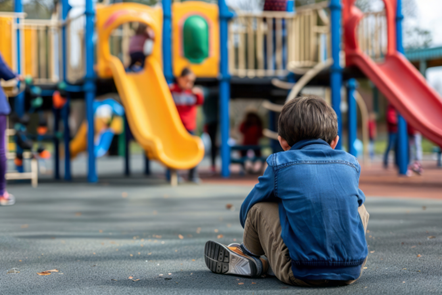
Understanding trauma to support children’s well-being is the second in our three-part series on “Eliminating Expulsions, Suspensions, and Exclusions”. This topic is crucial to reducing these harmful practices. Educators, providers, and caregivers may learn to see through a trauma lens, past children’s challenging behaviors, to create supportive learning environments for all young learners. If you missed Part 1 of the series, please check it out to learn about the impact of these disciplinary measures and how expulsions, suspensions, and exclusions disproportionately affect children from the global majority and those from low-income families.
The Impact of Trauma on Behavior and Learning
Young children often exhibit behavior problems stemming from unaddressed trauma rather than defiance or lack of self-control. Adverse childhood experiences (ACEs) like family instability, community violence, or poverty can disrupt brain development, making it hard for children to regulate emotions and behaviors in typical classroom settings. Trauma can manifest as acting out, withdrawal, or difficulty focusing.
Understanding trauma’s effects on development helps educators interpret challenging behaviors with compassion, focusing on de-escalation rather than punishment. A supportive approach can transform children’s ability to self-regulate and maintain their place in the educational environment.
Viewing Children’s Challenging Behaviors Through a Trauma Lens

Trauma results from experiences perceived as physically or emotionally harmful, overwhelming a person’s ability to self-regulate. When trauma affects executive functioning—the cognitive processes for planning and decision-making—it impairs a person’s ability to think clearly, communicate needs, and regulate emotions. It makes it difficult, even impossible, to make good decisions and often make any decisions at all.
In children, this often appears as:
- Impulse Control: The child might have trouble waiting their turn, interrupt frequently, or grab toys from others without understanding the need to ask or wait.
- Attention and Focus: They may have difficulty staying engaged, frequently shifting focus or completing tasks without reminders.
- Working Memory: Following multi-step instructions can be challenging, forgetting what to do next even with short tasks.
- Emotional Regulation: The child may exhibit intense emotional responses to small frustrations, like throwing a tantrum and finding it difficult to calm down independently.
- Cognitive Flexibility: Changes in routine or schedule are often difficult – moving on to a new plan when a planned outdoor activity is canceled is hard and very upsetting.
Trauma injures a child’s brain and stress response system, leading to long-term behavioral challenges. Executive functioning, social skills, and self-regulation decline, while anxiety, depression, and internalizing or externalizing behaviors increase.
Behaviors Linked to Trauma
Outside of typical challenging behaviors children exhibit, trauma-impacted children may engage in one or more of the following behaviors:
- Hypervigilance or exaggerated startle responses.
- Persistent fear and anxiety without present threats.
- Re-experiencing traumatic events through play or nightmares.
- Intense tantrums or cannot be soothed.
- Extreme avoidance of interactions with other children or adults.
- Dissociation from the here-and-now or “spacing out.”
Infants may exhibit fussiness, trouble sleeping or settling for a nap, changes in bowel movements, or new or exaggerated startle responses.
These behaviors can create stress for educators. Increased teacher stress promotes burnout. A cycle starts where increased staff stress results in harsher responses, exacerbating the stress and potentially leading to expulsion or suspension.
Breaking the Cycle
Understanding trauma’s effects and responding with empathy is critical to reducing exclusionary practices. In the next blog installment, we’ll explore strategies to create supportive, inclusive environments that address trauma and promote children’s well-being.
If you’re interested in further exploring how we can eliminate suspensions and expulsions in early childhood settings—and why it matters—check out our NEW 2-hour eLearning course “Interventions for Preventing Suspensions and Expulsions Through Behavioral Observation and Documentation.” This course equips early childhood educators with the knowledge and strategies needed to prevent exclusionary practices/ With a focus on equity and timely interventions, educators will be empowered to foster safe, nurturing classrooms that honor every child’s right to learn while making a lasting, positive impact on children and families.
By Ellaine Miller, PhD, Think Small Program Leader of Training & Delivery